
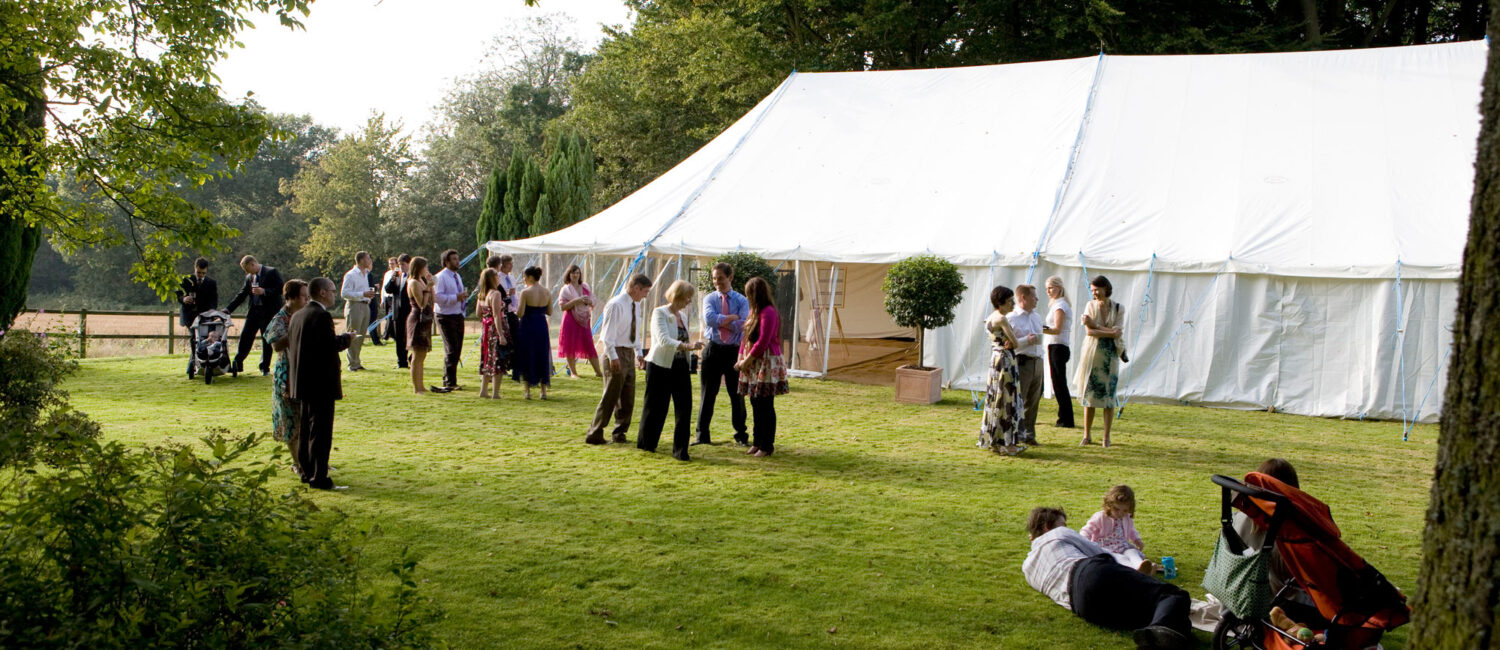
A traditional marquee can go under a number of names, pole tents, soft tops, (not to be confused with big tops or circus tents), or guyed marquees.
They all have one thing in common in that the main structural element is the cover itself. Most traditional marquees use cotton based fabrics as the covering, but PVC coated polyester is popular too.
Whilst traditional marquees can be as wide as 120 feet, most hirers will switch to frame marquees for widths above 40 or 50 feet (12 or 15 metres).
Being relatively inexpensive and easy to erect, traditional marquees are a popular choice for private functions and traditional venues such as agricultural shows and village fetes. The combination of the traditional look and feel of pole tents and the breathability of natural fibres means that this type of tent is still as popular as ever and still represents a significant slice of the market in the UK.
In recent years we have seen the introduction of American traditional and sailcloth tents which add an interesting visual dimension to this sector.
Historically, traditional pole marquees were made from cotton canvas, wooden poles, and hessian ropes. Today, many are made from PVC canvas or synthetic coated fabrics, and poles are aluminium or treated timber.
They rely on driven stakes (ground anchors) and guy ropes for stability, which cannot be used effectively on hard surfaces such as concrete, asphalt or rock.
They are at risk during snowy conditions, strong winds or prolonged damp ground. Snow accumulation can collapse poles, and high winds can uplift edges or tear fabric. Wet ground can also weaken peg anchoring.